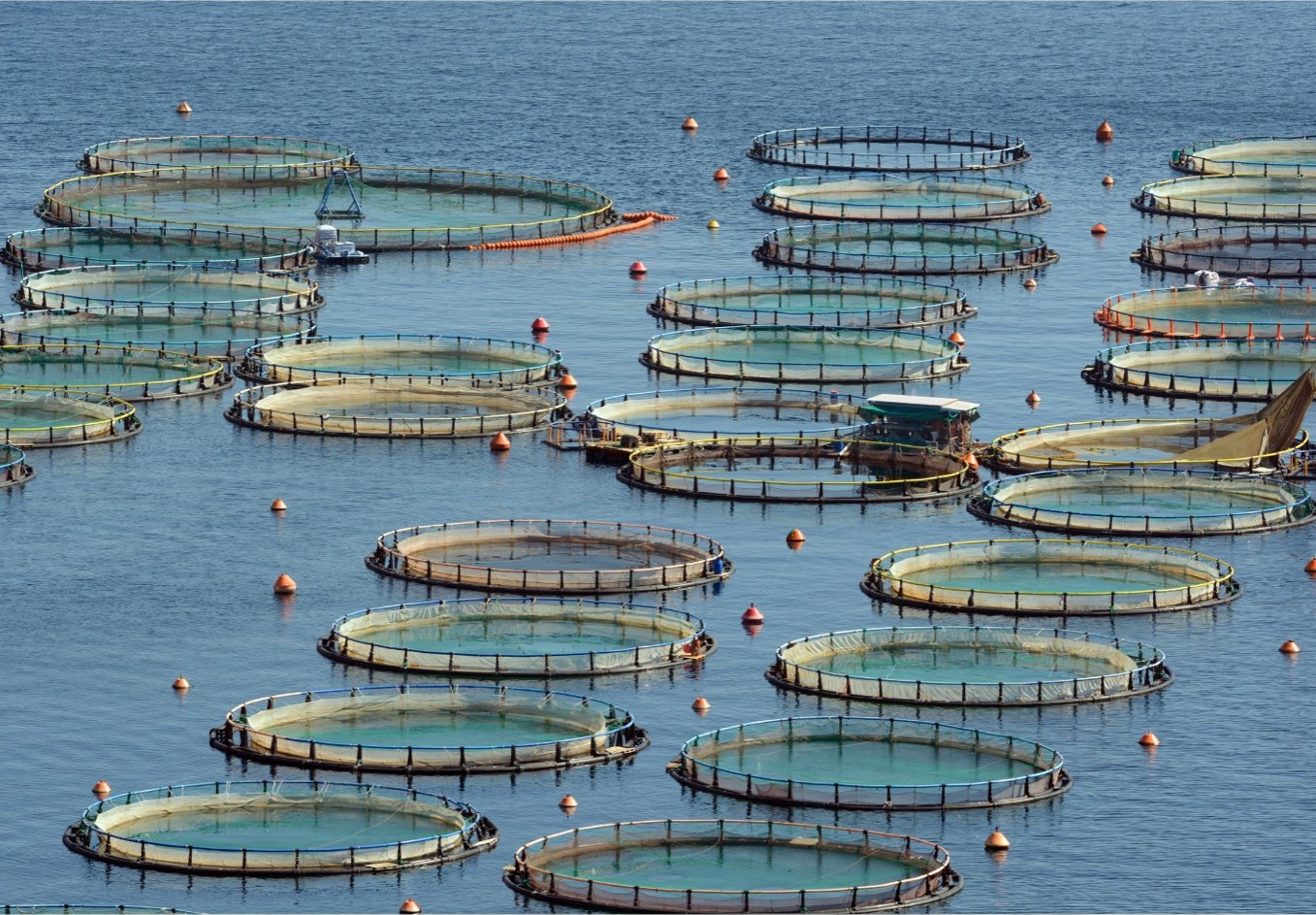
Predict before it impacts your harvest.
Marine early warnings for fish farms. Detect harmful algal blooms, jellyfish swarms, and water-quality shifts before they affect your stock.
Threats develop in hours. Sampling runs in daylight.
Aquaculture feeds more than three billion people and produces over half of all consumed seafood — yet remains exposed to marine events that develop in hours. Harmful algal blooms overnight. Jellyfish arrivals without warning. Dissolved oxygen drops in darkness.
Traditional manual sampling during daylight leaves farms blind to the 24/7 reality of marine conditions. A single event is capable of destroying an entire harvest.
Three integrated solutions for fish farms.
We combine satellite earth observations, in-situ measurements (including autonomous catamaran platforms where deployed), and oceanographic modelling to deliver 7-day forecasts of algae species, jellyfish, dissolved oxygen, temperature and other parameters relevant to your farm.
Continuous measurement of water quality parameters at your farm, with automated sampling and AI-powered species identification where deployed.
- · Autonomous catamaran platform
- · 24/7 sampling, no manual labour
- · AI species ID for HABs & jellyfish
7-day forecasts of algae species, jellyfish, dissolved oxygen and other parameters, with alerts categorised as safe / caution / warning.
- · 7-day forecast horizon
- · Time mitigation actions (feed, diffusors, bubble curtains)
- · Email + SMS alerts
Historical analysis of chlorophyll patterns, phytoplankton dynamics, and other factors influencing growth and risk across candidate or existing farm sites.
- · Multi-year heatmaps
- · Compare candidate sites
- · Diagnose existing-site issues
Predict the threats that reach your stock.

Species identification, concentration forecasts, and 72-hour advance warning of toxic events.
Camera-based detection, species counts, intrusion forecasts across multiple depth levels.
Continuous monitoring and forecasts of hypoxic conditions that threaten stock health.

Sea surface and sub-surface temperature, thermal stratification affecting feeding and growth.
What changes when you can see threats 72 hours out.
- 01Reduce stock mortality from environmental events.
Activate protective measures (feeding programmes, diffusors, bubble curtains) before harmful events reach your pens.
- 02Optimise harvest windows.
Plan harvest around favourable conditions; avoid harvesting during predicted bloom or low-O₂ periods that affect quality.
- 03Lower insurance exposure.
Demonstrable risk-mitigation reduces premiums and supports claim defence when events do occur.
- 04Free your team for higher-value work.
Automated 24/7 sampling replaces daylight-only manual sampling. Your staff focus on response and decision-making, not data collection.
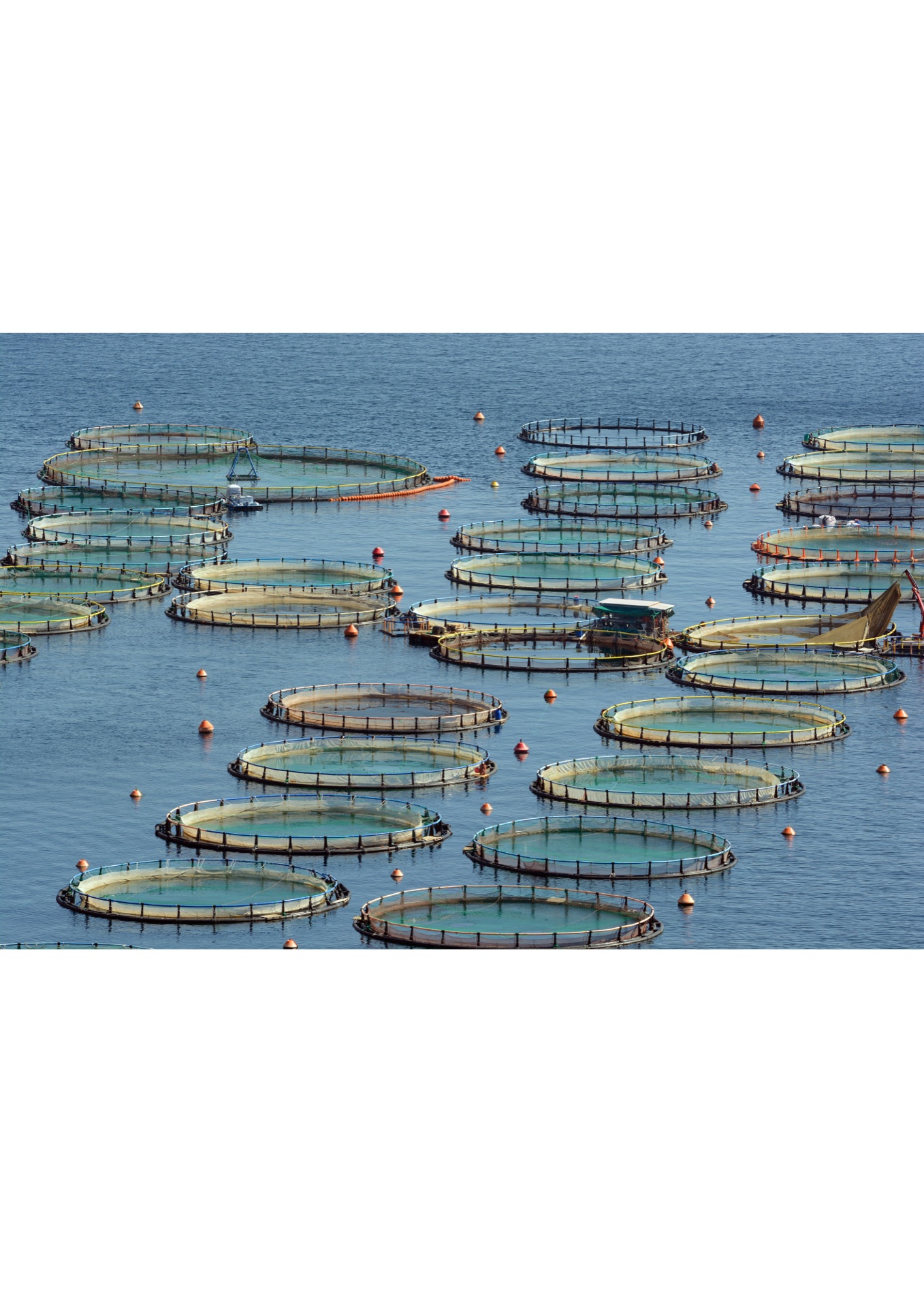
Three decades of harmful algal bloom monitoring for the Norwegian aquaculture sector.
When toxic algal blooms threatened to replicate the catastrophic fish kills of earlier decades — with potential losses of €50–200 million per event — the integrated monitoring system delivered 72-hour advance warnings.
The multi-sensor approach proved reliable by distinguishing genuine algal threats from harmless sediment disturbances, preventing costly false alarms. Daily monitoring covered 10–20 fish farms, with over 1,000 biological samples analysed each year.
Ready to predict the next threat before it reaches your pens?
30-minute discovery call. We map your operational risk to the parameters that matter at your farm, and recommend whether SEAWATCH® is a fit.
Book a meeting